Thursday, December 12, 2013
Goodman Brown: The man who saw true evil
After reading Hawthorne's Young Goodman Brown, I was confused as to what the author was trying to convey, and decided to look closer at the major events. Like many of the other literary works that center around the puritan way of life, religious piety plays into the story in some way. In this case, due to puritan life being about being pure Christians, Goodman Brown was just trying to follow what he had been taught all along. In the end he stayed the way he was at the beginning, but saw evil in everyone else because of their actions. There is a lesson to be learned from this story, as it reveals what most fail to see about themselves. Sometimes we instill an idea in someone and tell them to adhere to it for fear of punishment, failure, or loss. However, we fail to follow what we teach others to do or not to do at times, which raises a question. How can one warn another against something, while engaging in the very behavior, or action, he or she warned against? From the puritan view of it, Goodman Brown was most likely fearful and sad because he saw the truth. No one is perfect and there is evil in us all, along with good. The moral of the story, from my stand point, is that there is no such thing as perfect and that everyone is capable of good and evil.

Wednesday, December 11, 2013
What's behind the black Veil?
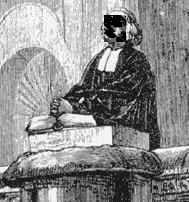
I recently reread Hawthorne's The Minister's Black veil after I began thinking about the veil covering the minister's face. The one thing I found more chilling than the story itself was how this poor soul subjected himself to a life of solitude and sadness. I began to wonder why someone who is surrounded by such happiness can throw it all away and withdraw into such darkness. Looking deeper into it, I discovered that the black veil was a representation of self punishment for sin. Being that this story was set in a puritan villiage in New England, I found myself asking why such practices were in place and what such actions said about the puritan society.
1) The puritans were firm believers in living godly lives, yet they dished out punishments at times which were far more evil than the sins themselves.
2) Many of said punishments were more psychological in nature than physical.
It is said that the minister wore his veil out of penance for his own sin of pride. Yet how could a man of God not realize that he could simply ask to be forgiven by way of prayer or confession? While his reason for wearing the veil is never disclosed, something far more disturbing is presented in its place. Some people, regardless of how happy they are, can fall into despair and never return.
1) The puritans were firm believers in living godly lives, yet they dished out punishments at times which were far more evil than the sins themselves.
2) Many of said punishments were more psychological in nature than physical.
It is said that the minister wore his veil out of penance for his own sin of pride. Yet how could a man of God not realize that he could simply ask to be forgiven by way of prayer or confession? While his reason for wearing the veil is never disclosed, something far more disturbing is presented in its place. Some people, regardless of how happy they are, can fall into despair and never return.
Sunday, December 8, 2013
A scarlet Letter on humanity

Of the many literary works I read over the semester, none stood out to me more than The Scarlet letter. Hester Prynne started out wearing it as a form of punishment, then grew to see it as a badge of honor in the end. But what of the puritan society that bestowed this mark upon her? Though they stressed religious piety and complete devotion to a sinless life, they bore their own scarlet letter by way of the Salem witch trials. Thus, it could be said that America itself is like Hester prynne ,in the sense that the killing of innocents as witches branded the very image of puritan society and early American history with a red letter A of sorts. However, just as it did in Hawthorne's story, what the A stands for has changed over time. At first, It could have stood for "Afraid", largely because of the fear of the unknown that fueled such tragic events. In the years following that era, it may have come to stand for " appauling", due to the nature of what took place.Today, this figurative letter our history bears has come to stand for " Acceptance" because we have learned from such mistakes. Over all, I believe that The Scarlet Letter and literary works like it are actually about the marks of shame we bear on ourselves in how we live among each other.
Subscribe to:
Comments (Atom)