I recently reread Hawthorne's
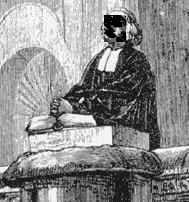
The Minister's Black veil after I began thinking about the veil covering the minister's face. The one thing I found more chilling than the story itself was how this poor soul subjected himself to a life of solitude and sadness. I began to wonder why someone who is surrounded by such happiness can throw it all away and withdraw into such darkness. Looking deeper into it, I discovered that the black veil was a representation of self punishment for sin. Being that this story was set in a puritan villiage in New England, I found myself asking why such practices were in place and what such actions said about the puritan society.
1) The puritans were firm believers in living godly lives, yet they dished out punishments at times which were far more evil than the sins themselves.
2) Many of said punishments were more psychological in nature than physical.
It is said that the minister wore his veil out of penance for his own sin of pride. Yet how could a man of God not realize that he could simply ask to be forgiven by way of prayer or confession? While his reason for wearing the veil is never disclosed, something far more disturbing is presented in its place. Some people, regardless of how happy they are, can fall into despair and never return.

Short and sweet, with seemingly almost as much sentiment as I have for our Puritanical forefathers.
ReplyDelete"Yes we love the Lord, forgive others, CASTIGATE YOURSELF TEN-FOLD FOR EVERY SIN YOU EVEN THINK ABOUT COMMITTING!!!!!
Uh, wait...what??
This reminds me of an article I read on fundamental Christian homeschooling. It was shocking. One mother would punish her child with a belt whip for every minute that the mother thought was wasted...changing clothes or getting dressed. Yes, if the mother thought the girl took too long when she got downstairs she would be whipped. This type, and many more punishments to the extreme for mundane infractions or 'sins' were rampant in the article, and I suppose even moreso in the Puritanical time. I enjoy pieces like this. They make us realize what we have for ourselves, and how much worse we could have it, (especially when the choices are not in our hands).